Shopify Plus Benefits: Features, Costs, and When It’s Worth Upgrading
Shopify Plus is not simply a more expensive version of Shopify. It unlocks advanced checkout customization, higher API limits, native B2B, unlimited staff accounts, expansion stores, and stronger support. For the wrong brand, it is an expensive upgrade that sits half-used while the budget would have done more on UX, performance, or conversion work.


Updated on June 10, 2026
This guide covers what Shopify Plus actually includes in 2026, what it really costs, and the specific signals that tell you the upgrade will earn its keep. We build Shopify and headless Shopify stores for a living, so we will be straight about both sides.
⚠ Running Shopify Scripts today? They stopped executing on June 30, 2026, with no rollback. If your store still uses Scripts for discounts, shipping, or payment logic, jump to the migration section - this is the most time-sensitive item in this guide.
What are the main Shopify Plus benefits?
Shopify Plus is worth it for high-volume, B2B, international, multi-store, or technically complex brands that need checkout customization, higher API limits, and native wholesale tools.
It starts at $2,300/month on a 3-year term or $2,500/month on a 1-year term, before apps, development, and integrations.
Standard Shopify is usually enough if you do not need complex B2B, custom checkout logic, or enterprise integrations.
The honest test is rarely revenue alone. It is whether platform limits are actively costing you money or slowing the team down. If checkout constraints hurt conversion, wholesale is strategic, or you keep hitting API ceilings on integrations, Plus starts to pay for itself. If none of that is true, the money works harder elsewhere.
| Benefit | What it unlocks | Best fit |
|---|---|---|
| Native B2B / wholesale | Company accounts, custom catalogs, price lists, payment terms | Wholesale + DTC hybrids |
| Checkout customization | Checkout Extensibility, UI Extensions, Shopify Functions | Conversion-focused or complex carts |
| Higher API limits | Up to 500% higher API call capacity | ERP / PIM / CRM / OMS-heavy ops |
| Expansion + international | Up to 10 stores, Markets, multi-currency and language | Multi-brand, cross-border sellers |
| Automation + governance | Shopify Flow, unlimited staff, custom roles | Large teams, complex workflows |
What is Shopify Plus and who is it for?
Shopify Plus is Shopify’s enterprise tier. Same core platform, higher ceilings. It adds B2B, deeper checkout control, more automation, expansion stores, higher API limits, a 99.99% uptime SLA, and priority support on top of the standard experience.
It is built for brands operating at scale or with real operational complexity. For a full feature-by-feature breakdown, see our Shopify vs Shopify Plus comparison. Here we focus on the benefits, the costs, and the upgrade decision.
Some context for scale: Shopify merchants accounted for more than 14% of US ecommerce in 2025, on $378.4 billion in gross merchandise volume. The infrastructure under Plus is the same engine built for that volume.
How much does Shopify Plus cost?
Base price: $2,300/month (3-year term) or $2,500/month (1-year term). Check the official pricing.
Real all-in cost for mid-market brands often runs $4,000 to $10,000+/month once apps, development, and integrations are included.
A variable platform fee applies to higher-volume stores, but Shopify does not publish the exact terms. Get them in writing.
The 3-year term is cheaper per month and locks you in. The 1-year term costs more and keeps an exit open. That base fee is the floor, not the ceiling.
The real total cost of ownership
| Cost category | Typical range |
|---|---|
| Shopify Plus license | $2,300-$2,500+/month |
| Apps and extensions | $500-$2,000+/month |
| ERP/PIM/CRM integrations | Variable, often the largest line over time |
| Custom development | $5,000-$30,000+ |
| Ongoing maintenance | Variable |
| Headless storefront development | Project dependent |
| All-in mid-market spend | $4,000 to $10,000+/month |
Variable platform fee. For higher-volume businesses, Shopify supplements the flat fee with a variable platform fee tied to sales and business structure. Shopify confirms the fee exists and is calculated differently for B2B and D2C orders, but it does not publish the threshold, rate, or cap (Help Center). Agencies commonly report it activating near $800,000 in monthly sales, at roughly 0.25% to 0.40% of sales, capped around $40,000/month. Those figures conflict across sources. Confirm your exact terms with the Plus sales team in writing before you sign.
When can Shopify Plus pay for itself?
Shopify Plus typically earns its keep when it eliminates bottlenecks that directly impact revenue or operational efficiency.
Examples include:
reducing manual B2B order processing
improving checkout conversion
simplifying international expansion
replacing multiple disconnected systems
reducing custom workaround maintenance
A common mistake is evaluating Shopify Plus solely as a software subscription – it is an operational platform decision.

Unsure whether Shopify Plus would actually pay for itself?
We help ecommerce teams assess platform costs, integration effort, operational savings, and expected ROI before committing to an upgrade.
Main Shopify Plus benefits for scaling ecommerce brands
What B2B features does Shopify Plus include?
Native B2B replaces the old password-protected wholesale store.
Company accounts, customer-specific catalogs and pricing, payment terms, and buyer permissions are built in.
B2B is now a first-class part of Plus, and the old wholesale-store workaround is gone. You manage company accounts, assign buyer roles and permissions, publish customer-specific catalogs and price lists, set net payment terms, and run B2B and DTC from the same admin.
It connects to the back office too. ERP, PIM, and CRM integrations keep catalogs, pricing, and customer records in sync rather than maintained by hand.
The demand signal is real. B2B commerce, a Plus-exclusive offering, grew GMV 96% in 2025, making it one of Shopify’s fastest-growing segments (FY2025 results). For wholesale-plus-DTC hybrids, that is a direct argument for the upgrade.
When B2B gets complex, with deep ERP logic, bespoke buyer portals, or custom approval flows, a headless or custom storefront often does the heavy lifting on the front end while Plus handles commerce in the back.
Shopify Plus checkout customization and Checkout Extensibility
Checkout Extensibility replaces hard-coding checkout.liquid.
UI Extensions, Shopify Functions, and payment, delivery, and discount customizations cover most logic without touching core checkout code.
Checkout is where Plus earns a lot of its keep. The old approach of editing checkout.liquid directly is retired. The modern stack is Checkout Extensibility:
Checkout UI Extensions for custom fields, messaging, and upsells
Shopify Functions for discount, shipping, and payment logic
payment and delivery customizations to reorder, rename, or gate options
post-purchase, thank-you, and order-status page customization
Why it matters: checkout friction is where revenue leaks. Shopify reports Shop Pay delivers an average 9% conversion lift across checkouts and 18% higher conversion for returning customers, with one Shopify-cited study showing up to 50% lift versus guest checkout (Shopify Enterprise). Practitioners put optimized custom checkout at a 10 to 20% conversion improvement. Treat the high end as a ceiling, not a promise.
When B2B or regulated checkout logic outgrows native tools, that is the point where headless or a custom storefront enters the conversation.
Shopify Functions vs Shopify Scripts: what changed in 2026?
Shopify Scripts are no longer active. Editing and publishing stopped on April 15, 2026, and all Scripts stopped executing on June 30, 2026.
Shopify Functions are now the replacement path for checkout, discount, shipping, and payment logic that previously depended on Scripts.
For Shopify Plus merchants, this is no longer a migration deadline. It is a post-sunset risk check.
If your store still had Scripts in place after June 30, 2026, those Scripts are no longer running. The storefront may still load and checkout may still work, but any custom logic handled by Scripts may have stopped applying. That can affect discount rules, shipping rules, payment method logic, wholesale pricing, bundle logic, or other checkout-level customizations.
The key dates were:
April 15, 2026: Shopify stopped allowing merchants to edit or publish Scripts. Existing Scripts could still run, but the code was frozen.
June 30, 2026: Shopify Scripts stopped executing entirely.
Shopify has confirmed this date will not move again after two earlier extensions (Shopify changelog).
The replacement is Shopify Functions. Functions run discount, shipping, and payment logic on a faster, modern runtime, integrate with the rest of the platform, and deploy as installable extensions. Migration ranges from a few hours for simple logic replaceable by a public app to several weeks for complex custom rules that need bespoke Function development.
If Scripts still power your tiered wholesale pricing, conditional discounts, or shipping gates, audit them now. Developer availability tightens as the deadline closes.
Migration checklist:
run Shopify’s Scripts customizations report to inventory what you use.
map each Script to a Function, public app, or native feature.
rebuild and test in a staging store before cutover.
migrate well before June 30, 2026, not the week of.
Still relying on Shopify Scripts?
Migrating before the retirement deadline reduces risk and prevents checkout disruptions.
What is headless Shopify and do you need it?
Headless decouples the storefront from Shopify’s back end for full design and performance control.
It works with both standard Shopify and Plus. Plus adds B2B, checkout, and API capacity behind the custom front end.
When you need a storefront no theme can deliver, headless is the path. You keep Shopify as the commerce engine and build the front end in a JavaScript framework like Next.js or with Shopify Hydrogen.
Hydrogen vs Next.js in short: Hydrogen is Shopify’s own React framework, tuned for Shopify and deployed on Oxygen at no extra hosting cost. Next.js is framework-agnostic, integrates with any CMS or service, and gives you more freedom across the stack.
Where Plus helps headless:
higher API limits feed data-hungry custom front ends without throttling.
native B2B and checkout customization stay available behind the custom UI.
expansion stores and Markets support multi-brand and cross-border builds.
Performance is the payoff. A well-built headless front end gives you direct control over Core Web Vitals and page speed, which feeds both conversion and search. Pair it with a headless CMS so marketing can ship content without a developer.
The trade-off is honest: headless adds engineering and maintenance overhead. It earns its place when design, performance, or content flexibility are strategic. It does not when a good theme would do.

Thinking headless on Shopify or Plus?
We build Hydrogen and Next.js storefronts on Shopify.
How do Shopify Plus API limits help with integrations?
Plus offers up to 500% higher API call limits than standard plans.
That capacity is what makes heavy ERP, PIM, CRM, OMS, search, and fulfillment integrations viable.
At enterprise scale, your store is a hub wired to other systems, and standard API limits become the bottleneck during sync windows and high-frequency operations. Plus raises the ceiling with up to 500% higher API call limits.
That headroom matters for:
ERP (inventory, orders, finance)
PIM (product data at scale)
CRM (unified customer records)
OMS (order orchestration across channels)
search and merchandising
warehouse and fulfillment systems
One honest caveat: Plus runs a storefront extremely well, but it is not an ERP. Past a certain complexity, you run an ERP alongside it, and the integration between the two becomes the project that matters.
How does Shopify Plus support international and multi-store growth?
Up to 10 stores total: one primary plus nine expansion stores under one Plus contract.
Shopify Markets handles multi-currency, multi-language, and regional pricing.
Going global cleanly is a core Plus benefit. You get up to nine expansion stores on top of your primary store, so regional or brand-specific storefronts live under one contract instead of separate subscriptions.
Shopify Markets and Managed Markets handle localization: automatic local-currency detection, multi-language storefronts, regional catalogs, and market-specific pricing and duties. Customers shop in their own currency and language, which lowers friction at the exact moment it costs you conversions.
Shopify Flow automation for scaling ecommerce operations
Shopify Flow automates operational workflows with no code.
The value is removing manual bottlenecks at scale: fraud, segmentation, routing, approvals.
Shopify Flow turns repetitive operations into automated rules. The business outcome matters more than the feature:
flag and hold high-risk orders before they ship (fraud control)
segment and reward VIP or high-spend customers automatically
route orders by location, inventory, or fulfillment rules
trigger low-stock alerts and reorder prompts
run B2B approval and order-review workflows
At scale, manual handling does not just cost time, but accuracy. Flow keeps the operation consistent as volume grows.
What support and team management does Shopify Plus add?
Unlimited staff accounts, custom roles, and organization-level admin.
Priority support plus launch and migration help.
Plus changes how a large team operates the store. You get unlimited staff accounts (standard plans cap them), granular custom roles and permissions, and an organization admin to manage access across multiple stores.
On support, Plus adds priority 24/7 access and a dedicated success manager, plus launch and migration support. That help covers platform setup and strategy. It does not cover building custom themes, bespoke UX, or headless front ends. For that, you bring in a Shopify development partner like us.
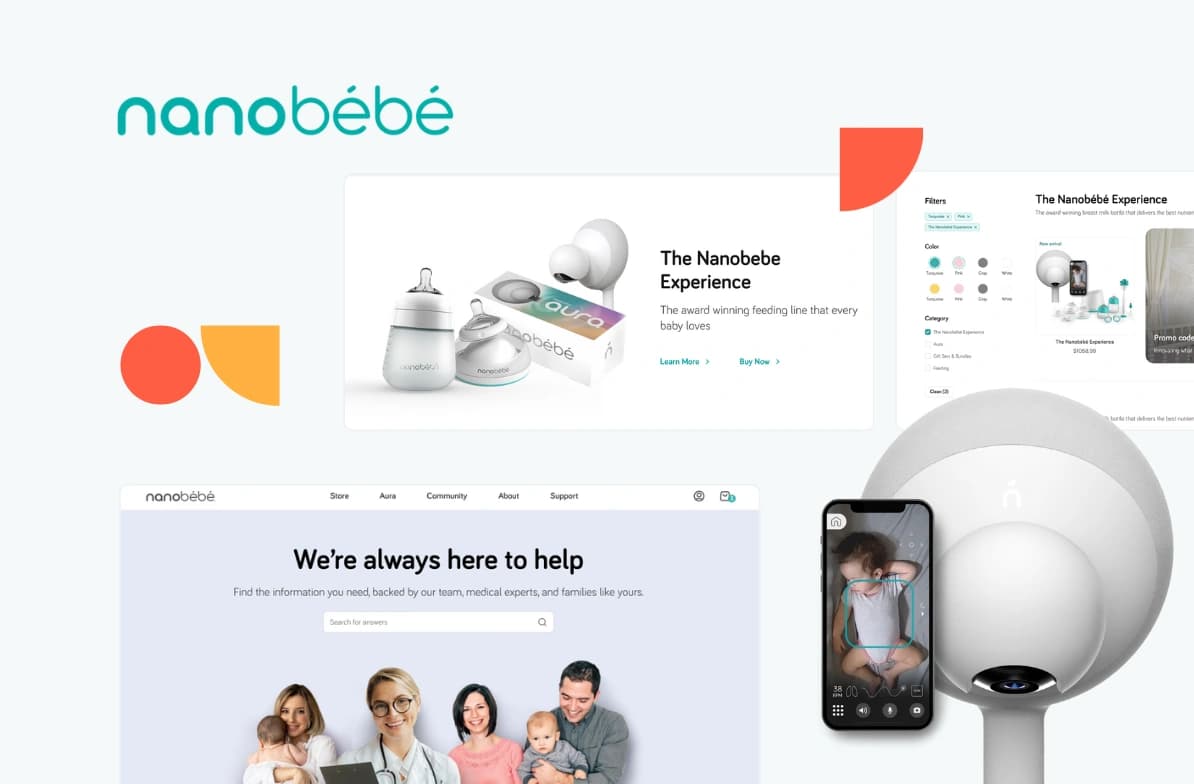
Nanobébé
Baby products e-commerce
Naturaily delivered a flexible headless commerce setup that made content management easier, supported product launches, and improved the online shopping experience.
5/5
Clutch review
117%
increased performance
80%
reduced TBT
When is Shopify Plus worth it?
The upgrade earns its keep when a real limit is costing you money or slowing the team. Revenue alone is a weak signal. Friction is the strong one.
Shopify Plus is usually worth considering when:
annual revenue is high enough that lower transaction fees or operational savings actually move the P&L (the ~0.2% fee gap versus Advanced starts to matter around $1M/year)
checkout limitations are measurably hurting conversion
B2B or wholesale is strategic, not a side experiment
you sell internationally and need multi-currency, multi-language, and regional pricing
the store depends on many integrations (ERP, PIM, CRM, OMS) that strain standard API limits
a large team needs advanced roles and permissions
standard Shopify apps have piled up into technical debt
a headless storefront is on the roadmap
The break-even logic in plain terms: take your annual revenue, multiply the ~0.2% transaction-fee gap to estimate savings, add a realistic conversion lift from a better checkout, then weigh that against the all-in Plus cost. If the first two cover the third with room to spare, Plus likely pays for itself. If it is close, wait.
Real outcomes brands have reported after moving to Plus:
Bombay Shaving Company cited a 150% conversion uplift and a 20x increase in online revenue after migrating from Magento;
Polyvinyl Records reported +20% revenue at a 3.88% conversion rate while unifying DTC, B2B, and downloads;
Trévi reported 162% revenue growth after consolidating systems onto Shopify (Shopify case studies).
Bronson Labs moved from Magento to Shopify and cut maintenance cost threefold with 70% less dev time. See the Bronson Labs case study.
Bronson Labs wanted to add content, integrations, and special offers quickly. After migrating to Shopify, all website changes became easy, cutting maintenance costs threefold.
5/5
Clutch review
70%
Less dev time
3x
Lower maintenance cost

When is Shopify Plus not worth it?
Plus is a poor fit more often than vendor marketing admits. If your operation is simple, the money works harder elsewhere.
Hold off on Shopify Plus when:
you run a simple catalog with low operational complexity
internationalization is minimal or not on the roadmap
you have no real B2B or wholesale needs
you do not need custom checkout logic
the team is small and standard roles are enough
you are early-stage and still finding product-market fit
the budget would do more on UX, performance, or conversion optimization
If nothing on the “worth it” list is actively costing you money, Advanced Shopify plus focused CRO and performance work usually beats a Plus upgrade. See our Shopify Plus vs Shopify Advanced breakdown if you are weighing the two.
Shopify Plus vs headless Shopify: do you need both?
These solve different problems. Headless is a front-end architecture. Plus is a commerce tier. You can run either alone or both together.
| Scenario | Recommendation |
|---|---|
| Need a custom frontend only | Headless Shopify may be enough |
| Need enterprise B2B, checkout logic, API capacity, and a custom frontend | Shopify Plus + headless |
| Need a simple store with better content flexibility | Standard Shopify + headless CMS may be enough |
Headless gives design freedom, performance control, and content flexibility on standard Shopify or Plus. Plus gives B2B, checkout customization, API capacity, and expansion stores regardless of how the front end is built. When you need front-end freedom and enterprise commerce features, you run both. When you only need one, do not pay for the other.
Should you upgrade to Shopify Plus?
Upgrade to Plus when a concrete limit is costing you revenue or slowing the team: checkout friction, B2B demand, integration ceilings, multi-store growth, or a headless roadmap. The price is justified by what Plus unlocks. Your revenue line alone does not justify it.
Stay on standard Shopify when your operation is simple and the budget would do more on conversion, content, or performance. There is no prize for paying for capacity you will not use.
As a certified Shopify Plus Partner, Naturaily works with growing ecommerce brands on Shopify Plus implementations, checkout modernization, headless commerce, ERP integrations, and long-term platform optimization. If you're evaluating an upgrade, contact us to review your current architecture and identify where Shopify Plus can deliver measurable operational or commercial value.
FAQ
Shopify Plus FAQ
Shopify Plus is worth it when platform limits are actively costing you money: checkout friction hurting conversion, strategic B2B, heavy integrations hitting API ceilings, or multi-store and international growth. Revenue alone is a weak signal. If your operation is simple, standard Shopify plus conversion and performance work usually delivers more.
Shopify Plus starts at $2,300/month on a 3-year term or $2,500/month on a 1-year term. All-in costs for mid-market brands often reach $4,000 to $10,000+/month once apps, development, and integrations are included. Higher-volume stores may move to a variable platform fee, with terms set by Shopify’s sales team rather than published.
Yes. B2B is a Plus-exclusive offering with company accounts, customer-specific catalogs and price lists, payment terms, and buyer permissions, all managed alongside DTC. Shopify reported B2B GMV grew 96% in 2025, making it one of its fastest-growing segments.
Shopify Functions replaced Shopify Scripts. Editing and publishing Scripts stopped on April 15, 2026, and all Scripts stopped executing on June 30, 2026. If you still run Scripts for discounts, shipping, or payment logic, migrate to Functions before the cutoff.
No. Headless works with both standard Shopify and Plus. Plus adds value behind a headless storefront through higher API limits, native B2B, and checkout customization, but you can build headless on standard Shopify if you only need front-end freedom.
Plus is not worth it for simple catalogs, small teams, early-stage stores, or brands with no B2B, custom checkout, or international needs. In those cases, the budget usually does more on UX, performance, and conversion optimization than on the upgrade.
Choose Advanced when your operation is straightforward and the ~0.2% transaction-fee gap and standard features cover your needs, typically below the point where checkout, B2B, or integration limits cost you money. Choose Plus when a concrete limit is measurably hurting revenue or slowing the team, or a headless roadmap is in play. Around $1M/year in revenue the fee savings start to matter, but friction, not revenue, is the deciding signal.
Yes. Plus offers up to 500% higher API call limits than standard plans, which is what makes heavy ERP, PIM, CRM, OMS, search, and fulfillment integrations viable. Note that Plus runs a storefront well but is not an ERP, so complex operations typically run an ERP alongside it.
Weighing the upgrade?
We help brands decide, migrate, and build on Shopify Plus, headless included.